Your front door does more work than you probably give it credit for. It’s the first thing guests see, sure, but it’s also one of the most significant thermal barriers between your conditioned indoor air and whatever the weather throws at your house. A poorly insulated entry door can account for a surprising percentage of your home’s energy loss, quietly driving up heating and cooling costs month after month. Understanding how ProVia entry doors lower your energy bills starts with recognizing just how much your current door might be costing you. ProVia has built its reputation on engineering doors that treat energy efficiency as a core function, not an afterthought. From polyurethane-filled cores to advanced glazing systems, every component is designed to minimize thermal transfer. If you’ve been watching your utility bills climb and wondering where the money goes, your front door deserves a hard look. The difference between a standard builder-grade door and a purpose-built energy-efficient model is measurable in both comfort and dollars.
The Connection Between Entry Doors and Energy Efficiency
Most homeowners think about windows and attic insulation when they consider energy upgrades. Doors tend to get overlooked, which is a mistake. The U.S. Department of Energy estimates that air leaks around doors and windows account for 25-30% of residential heating and cooling energy use. Your entry door sits at the intersection of structural framing, weatherstripping, threshold seals, and glass panels, and every one of those elements is a potential weak point.
The physics are straightforward. Heat moves from warm areas to cool areas. In winter, your heated indoor air pushes through gaps and poorly insulated door panels toward the cold outside. In summer, the process reverses. A door with a low R-value (the measure of thermal resistance) essentially acts as a thin wall with holes in it.
Identifying Thermal Leaks at the Threshold
The threshold area, where your door meets the floor, is one of the most common leak points. You can often feel cold air streaming in at the bottom of an old door on a windy day. Over time, sweeps wear down, thresholds warp, and the seal between door and frame degrades. An infrared thermal camera will reveal these leaks dramatically: bright streaks of heat escaping around the perimeter of the door.
Other common leak points include the area where the door panel meets the frame on the hinge side, the lock side where the latch engages, and any glass inserts. Each of these junctions requires precise engineering to maintain a tight seal over years of use.
Why Standard Doors Fail to Regulate Temperature
Builder-grade steel doors, the kind installed in most new construction, typically have minimal insulation. Many use a thin polystyrene core that provides an R-value of around 5-6. Compare that to a well-insulated wall, which might have an R-value of 13-21, and you can see the problem. Your door is often the weakest thermal link in your entire building envelope.
Standard doors also tend to use basic compression weatherstripping that loses its spring within a few years. The magnetic strips on some steel doors work initially but degrade with exposure to moisture and temperature cycling. Once that seal fails, you’re essentially heating or cooling the outdoors. Wood doors present their own issues: they expand and contract with humidity changes, creating seasonal gaps that let air flow freely.
Advanced Insulation Properties of ProVia Materials
ProVia approaches door construction differently than most manufacturers. Rather than treating insulation as one feature among many, they’ve built their entire product line around thermal performance. The result is a range of doors with R-values that significantly exceed industry standards.
The key is in the core material. While cheap doors use expanded polystyrene (think: styrofoam cooler), ProVia uses injected polyurethane foam in most of their product lines. Polyurethane has roughly twice the insulating value per inch compared to polystyrene, and because it’s injected as a liquid, it expands to fill every cavity and void inside the door panel. There are no gaps, no air pockets, no thermal shortcuts.
Embarq: The Highest Energy-Efficient Door in the U.S.
ProVia’s Embarq fiberglass door holds a distinction worth paying attention to: it carries the highest published energy efficiency rating of any entry door sold in the United States. The Embarq achieves a U-factor as low as 0.10, which translates to an R-value of approximately 10 for the door panel alone. For context, most standard entry doors land somewhere between R-5 and R-7.
The Embarq uses a proprietary composite construction with an insulated core that’s significantly thicker than conventional doors. It’s designed specifically for climates with extreme temperature swings, where the difference between indoor and outdoor temperatures can exceed 60 degrees Fahrenheit for months at a time. For Kansas City homeowners who deal with both brutal summers and frigid winters, this kind of performance translates directly to lower HVAC runtime.
Signet and Heritage Fiberglass Polyurethane Cores
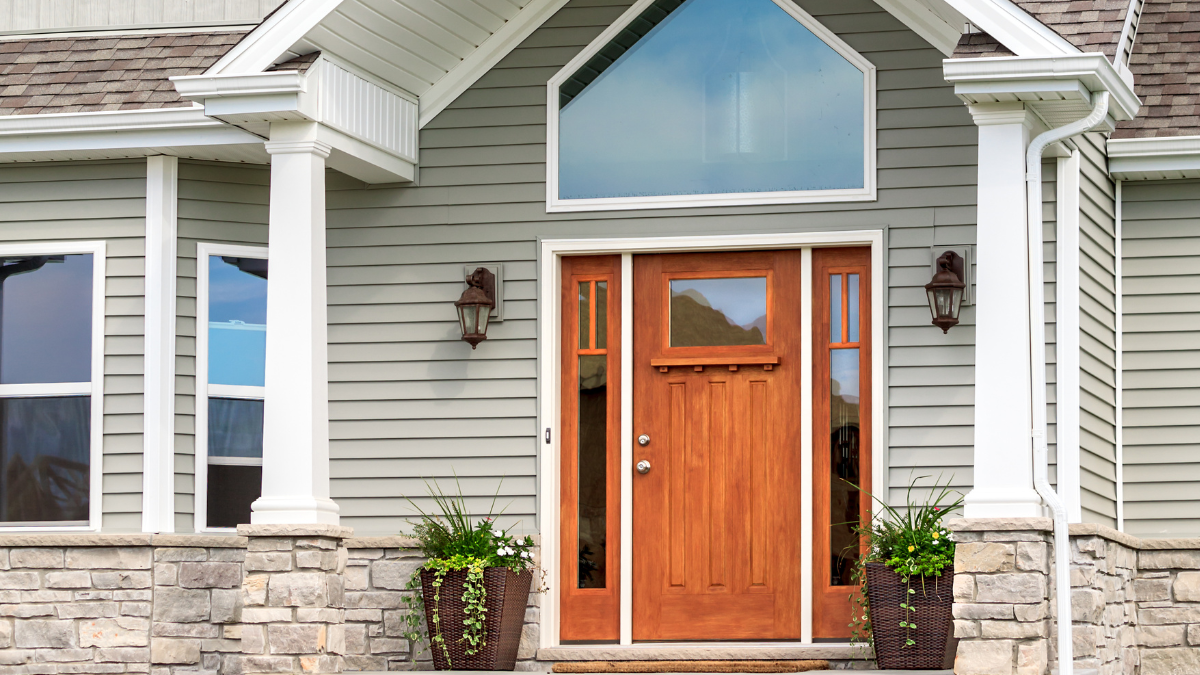
The Signet and Heritage lines represent ProVia’s most popular fiberglass options. Both use polyurethane foam cores that deliver R-values in the range of 7-8, well above what you’ll find in a typical home improvement store door. The Signet series features a realistic wood grain texture that’s nearly indistinguishable from actual wood, while the Heritage line offers a broader range of panel styles at a more accessible price point.
What makes fiberglass particularly effective as a door material is its inherently low thermal conductivity. Unlike steel, which readily conducts heat, fiberglass acts as a natural insulator even before you add the foam core. This means the entire door panel resists thermal transfer, not just the insulated center. The fiberglass skins also won’t warp, crack, or rot, so the insulation performance remains consistent for the life of the door.
Precision Weatherstripping and Seal Technology
A door’s insulation value means nothing if air is leaking around its edges. This is where many manufacturers cut corners, and where ProVia invests heavily. The seal system around a door is actually more complex than most people realize: it needs to accommodate the repeated mechanical stress of opening and closing, resist UV degradation, maintain flexibility across a wide temperature range, and still provide an airtight seal when the door is latched.
ProVia uses a multi-point sealing approach that addresses every edge of the door independently. The top and sides use different weatherstripping than the bottom, because the mechanical requirements at each location are different. This isn’t a one-size-fits-all strip of foam stuck into a groove.
Custom-Fit Q-Lon Weatherstripping Systems
Q-Lon weatherstripping is a foam-filled, fabric-covered gasket material that has become the gold standard in the door industry. ProVia uses Q-Lon along the top and sides of their door frames, where it creates a consistent compression seal against the door panel. The material recovers its shape after each compression cycle, meaning it maintains its sealing ability through tens of thousands of open-close cycles.
What sets ProVia’s implementation apart is the custom-fit approach. Each door is built to order with specific frame dimensions, and the weatherstripping is installed to match those exact measurements. This eliminates the gaps that occur when a standard-size door is fitted into a slightly out-of-square opening, which happens more often than you’d think, especially in older homes.
The Role of Bulb and Blade Sweeps in Preventing Drafts
The bottom of the door presents a unique sealing challenge. It needs to clear the threshold when opening but seal tightly when closed. ProVia addresses this with a combination of bulb sweeps and blade sweeps. The bulb sweep is a flexible, rounded gasket that compresses against the threshold to block air and water. The blade sweep is a thin, flexible fin that acts as a secondary barrier.
Together, these components create a double seal at the most vulnerable point of the door. The threshold itself is also adjustable on ProVia doors, allowing installers to fine-tune the compression for a perfect fit. This adjustability matters because floors settle over time, and a threshold that sealed perfectly on installation day might need tweaking a few years later.
Energy-Efficient Glass Options for ProVia Doors
Many entry doors include glass panels or sidelights, and glass is inherently a weaker insulator than a solid door panel. ProVia has addressed this head-on with glazing options that dramatically reduce heat transfer through the glass portions of their doors.
The company offers multiple tiers of glass performance, allowing homeowners to choose the level of efficiency that matches their climate and budget. Even their standard glass packages exceed what most competitors offer as premium upgrades.
ComforTech™ Warm Edge Glazing Systems
ProVia’s ComforTech glazing system uses a warm-edge spacer between the glass panes instead of the traditional aluminum spacer found in most insulated glass units. Aluminum is an excellent conductor of heat, which means it creates a thermal bridge around the perimeter of every glass panel. The warm-edge spacer is made from a low-conductivity material that breaks this thermal bridge, reducing heat loss at the glass edge by up to 70%.
The ComforTech system also includes multiple panes of glass with insulating gas fills between them. This creates dead air spaces that resist convective heat transfer. The result is a glass package that performs far closer to the solid portions of the door than traditional single or double-pane glass.
Low-E Glass and Argon Gas Insulation
Low-emissivity (Low-E) coatings are microscopically thin metallic layers applied to the glass surface. They work by reflecting infrared radiation, which is the primary mechanism of radiant heat transfer through glass. In winter, Low-E coatings reflect your interior heat back into the room. In summer, they reflect solar heat away from your home. ProVia uses multiple Low-E coatings on their glass packages to maximize this effect.
Between the glass panes, argon gas replaces regular air. Argon is denser than air and conducts heat more slowly, improving the insulating value of the air space by roughly 30% compared to a standard air fill. The combination of Low-E coatings and argon gas can push a glass panel’s performance from a mediocre R-2 to an impressive R-4 or better. When you consider that a typical entry door might have 4-8 square feet of glass, that improvement translates to meaningful energy savings.
The Long-Term ROI of ENERGY STAR® Certification
ProVia entry doors carry ENERGY STAR certification, which means they meet or exceed the efficiency standards set by the EPA for your specific climate zone. This certification isn’t just a marketing badge. It comes with tangible financial benefits that compound over time.
The average American household spends about $2,000 annually on energy bills, according to the Energy Information Administration’s 2025 data. Doors and windows together account for roughly 25-30% of that cost when they’re underperforming. Replacing a leaky, poorly insulated entry door with an ENERGY STAR-certified ProVia model can reduce the energy loss through that opening by 50-70%, depending on what you’re replacing.
Over a 10-year period, those savings add up. A homeowner replacing a worn-out builder-grade door might save $50-$150 annually on heating and cooling, depending on climate, energy prices, and the specific door chosen. That’s $500-$1,500 over a decade, which offsets a significant portion of the door’s cost. Factor in that ProVia doors carry a lifetime limited warranty and maintain their performance characteristics far longer than cheap alternatives, and the financial case becomes even stronger.
There’s also the home value angle. Real estate appraisers and buyers recognize ENERGY STAR-certified components as premium features. A ProVia entry door can boost curb appeal and resale value simultaneously, making it one of the few home improvements that pays dividends in both monthly savings and eventual sale price.
Maximizing Savings Through Professional Installation
Even the best door in the world will underperform if it’s installed poorly. This is the part of the energy equation that homeowners most often get wrong. A ProVia door’s energy ratings are measured under ideal installation conditions, and replicating those conditions requires experience and attention to detail.
Proper installation starts with the rough opening. The framing needs to be square, plumb, and properly sized. Gaps between the door frame and the rough opening must be filled with expanding foam insulation, not just stuffed with fiberglass batting. The threshold needs to be set level and adjusted for proper sweep compression. Every piece of weatherstripping must seat correctly against its mating surface.
A professional installer will also address the exterior flashing and caulking that prevents water infiltration around the door frame. Water damage to the surrounding structure can compromise insulation and create new air leak paths over time. Getting the installation right from day one protects your investment and ensures you actually receive the energy performance you paid for.
ProVia’s own dealer network includes certified installers who are trained specifically on their products. This matters because each door line has specific installation requirements, and a general contractor who installs a ProVia door the same way they’d install a big-box store door may miss critical steps.
If you’re a Kansas City homeowner looking to reduce your energy bills with a high-performance entry door, working with a local specialist makes all the difference. The team at Thermal King Windows handles ProVia door installations with the precision these products demand, ensuring you get the full energy savings you expect. Get a free quote and see how much you could save on your monthly bills.